Domain Model · Flow Scoper
Physics-Based Analysis Engine that Understands
and Predicts Water Network Behavior
The Domain Model is the Analysis Layer of LMapper. Built on Flow Scoper—Flowork’s proprietary 2D pipeline flow analysis software—it is a digital twin analysis engine that virtually simulates real-world flow rates, water pressure, and valve operations through 2D flow analysis to physically understand and predict network behavior. By quantitatively analyzing dynamic network behavior, it provides the physical foundation for all LMapper components, including AI training, anomaly identification, and operational scenario evaluation.

Accuracy
Achieves an analysis accuracy comparable to 3D simulation

Efficiency
Reduces computation time by 90% compared to 3D analysis

Scalability
Enables real-time analysis, allowing flexible application to large-scale water networks and diverse environments
Why two dimensions
Why 2D Flow Analysis?
Determining priorities across an entire water network requires both speed and precision simultaneously.
Single Cross-Sectional Average Velocity
Resolved in the Radial Direction
Every Cell, Every Time Step
Only 2D flow analysis can compute network-wide risk rankings for pipelines in near real time.
Flow Analysis
Precise Time-Series Simulation of
Dynamic Water Network Behavior
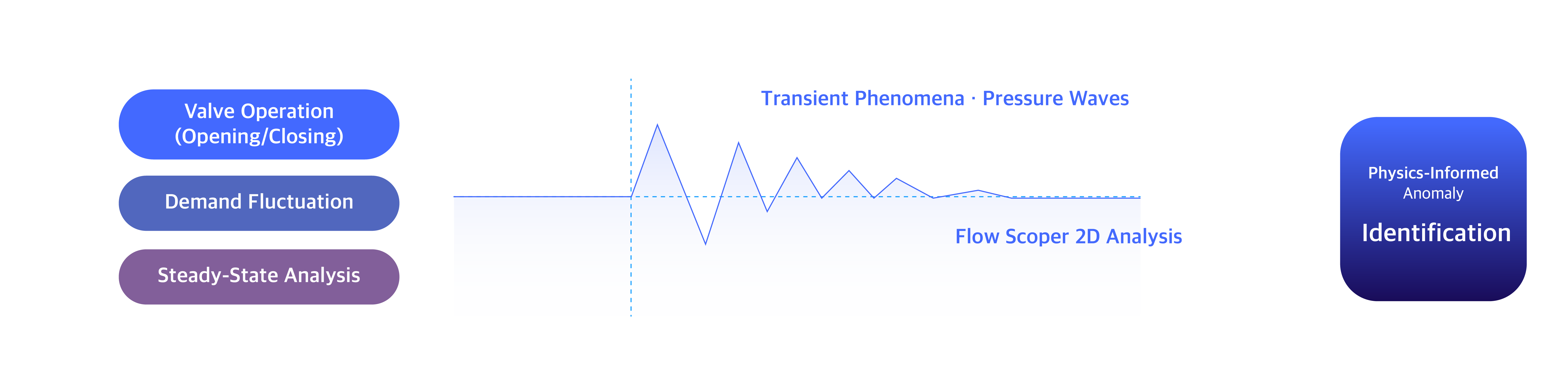
Calculates changes in pressure and flow rate over time to precisely simulate system response characteristics to instantaneous events such as valve opening/closing or demand fluctuations. By capturing transient phenomena and pressure waves missed by steady-state analysis, it provides physical evidence for anomaly signs.
Optimization
Predicting and Optimizing Network Performance
Based on Design Parameters
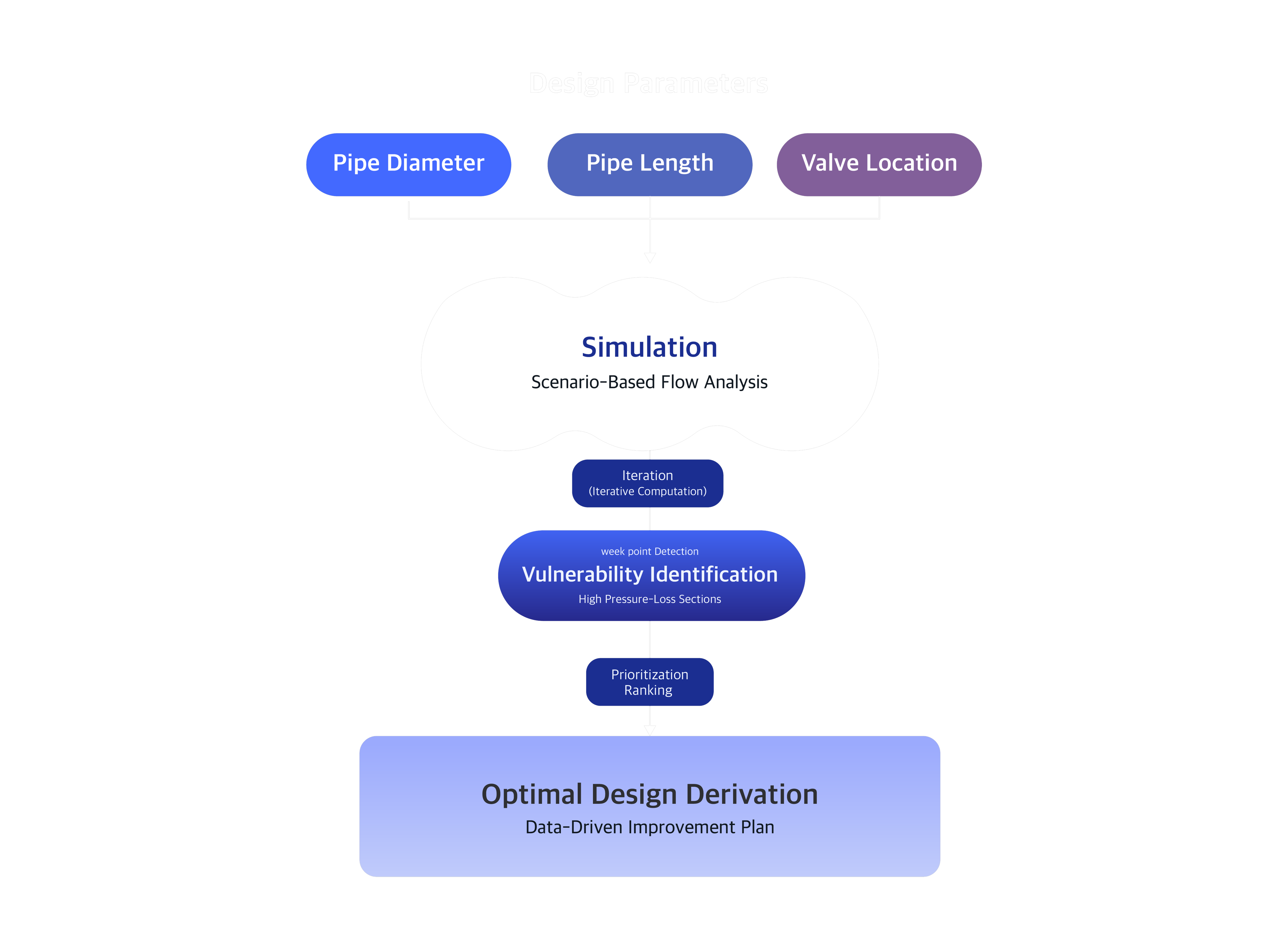
Simulates the impact of key design parameters—such as pipe length, pipe diameter, and valve location—on hydraulic flow. By identifying high pressure-loss sections and vulnerable points in advance, it derives optimal data-driven alternatives for both new designs and existing network rehabilitation.
AI Integration
Connecting Simulation Results to
AI Training Data
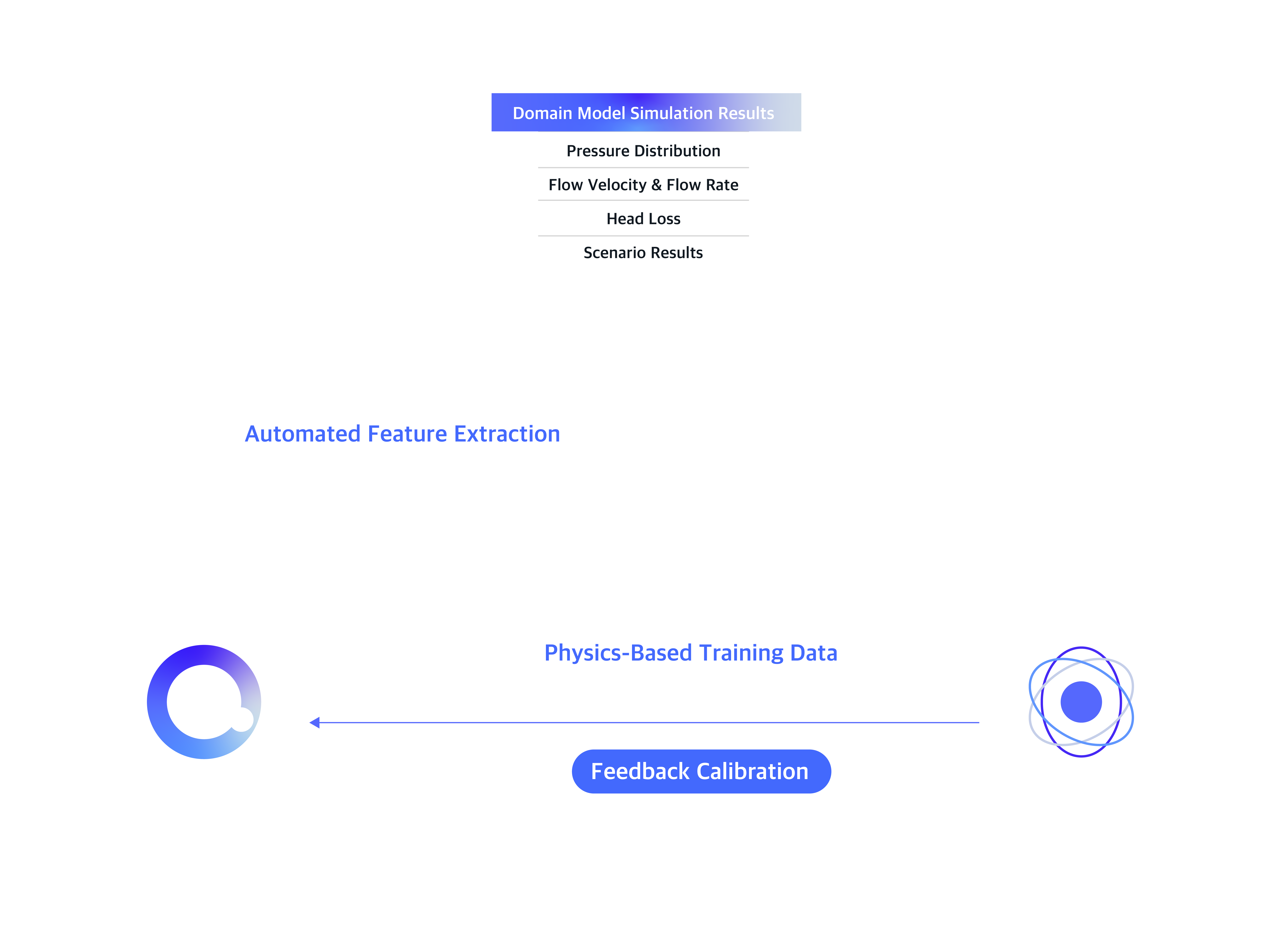
Automatically converts Domain Model simulation results into AI training features, supplying physics-based data to leak identification and anomaly detection models. By supplementing scarce real-world incident data with simulation, it completes a virtuous cycle where physical analysis and AI mutually reinforce one another.