Solution
Innovating Water Network Operations through System Simulation and Analysis
Identifies the condition of water network infrastructure and root causes of anomalies, predicting future changes through simulation.
Goes beyond simple prediction to innovate water network operations through physics-informed, insight-driven decision-making.

Data
Sensors · SCADA · Operational Data
- Water Pressure · Flow Rate · Water Quality
- Valves · Pumps · Reservoirs
- Real-Time Operational Data

Model
Domain Model Engine
- Network Structure Simulation
- Hydraulic · Water Quality · Control Logic
- Operational Scenario Simulation

Analysis
Condition Assessment · Root Cause Analysis
- Current Condition Diagnostics
- Anomaly Root Cause Tracing
- Impact Range Analysis

Decision
Response Recommendation · Decision-Making
- Optimal Response Scenarios
- Valve & Pump Control Recommendations
- Operational Decision Support
system process
A Complete End-to-End Process from Detection to Decision-Making
Connects detection, diagnostics, prediction, and decision-making into a single workflow to turn anomaly signs into actionable responses. By narrowing down suspected areas to individual pipeline sections, LMapper eliminates unnecessary excavation and inspections, saving time and manpower while delivering consistent, data-driven results rather than relying on individual experience.
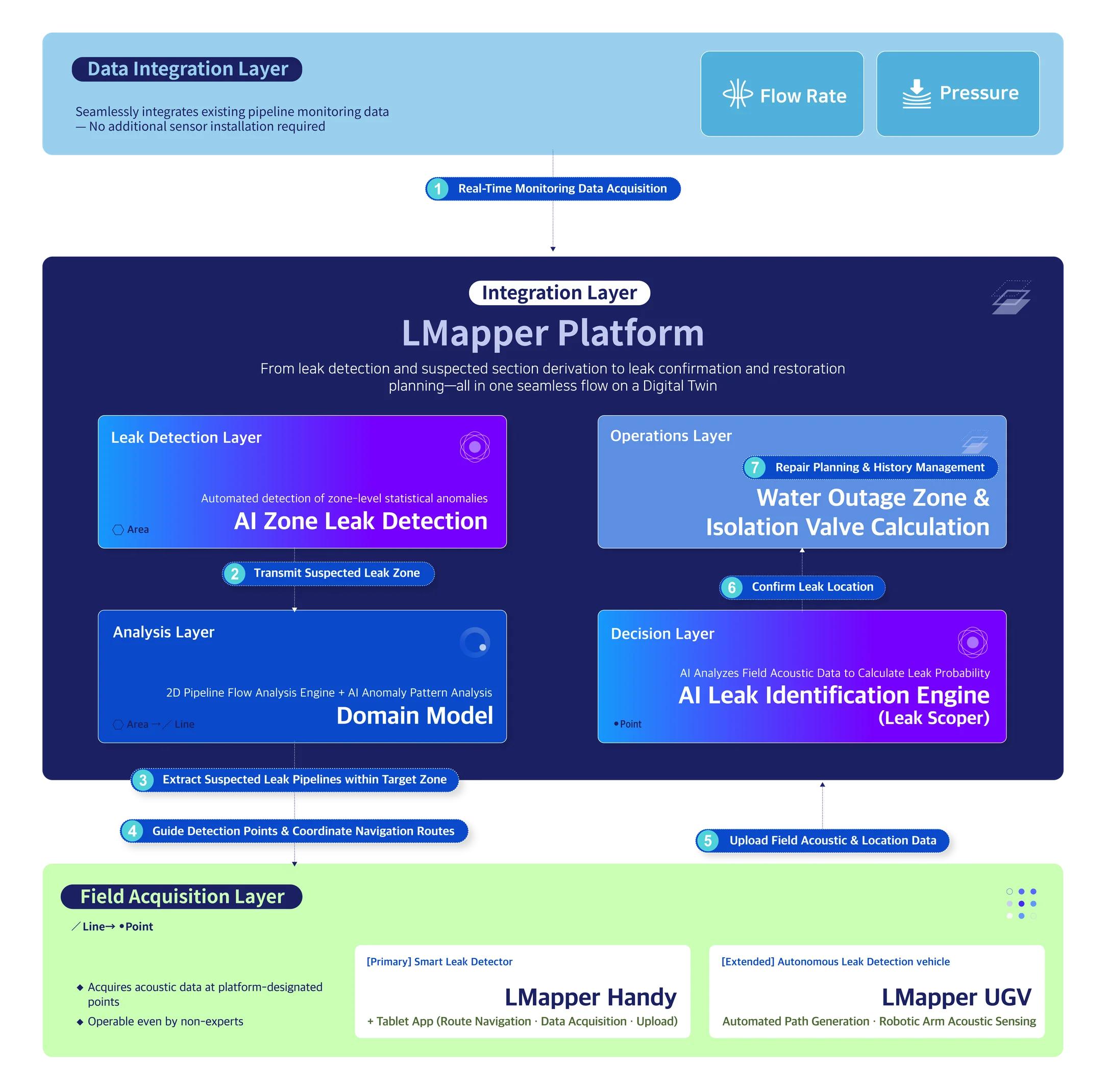
Beyond Simple Data Analytics: Innovating Water Network Operations through System Simulation and Analysis.
Network Anomaly Detection
Analyzes operational data to detect anomalies across the water network
Suspected Leak Zone Selection
Analyzes abnormal patterns and network conditions to identify target inspection zones (Zone/Area)
Detection Priority Assessment
Calculates node-level risk scores to select high-priority inspection points and pipelines
Automated Detection Project Generation
Automatically generates detection points, target sections, and work plans based on priority rankings
Field Data Collection
Acquires acoustic and location data at designated detection points and transmits them to the platform
AI Leak Identification
Leak Scoper analyzes point-by-point acoustic data to determine leak presence and calculate leak probability
Restoration Decision Support
Analyzes the impact range of confirmed leak points and network information to recommend optimal isolation and restoration plans
Work FLOW
LMapper Detection Workflow
Through its Zone–Line–Point (Area–Line–Point) framework,
LMapper progressively narrows the detection range across the entire water network,
simultaneously enhancing detection efficiency and accuracy.

Anomaly Zone Screening
Applies AI anomaly detection techniques to real-time SCADA monitoring data (flow rate and pressure) from waterworks utilities to identify abnormal events within the network.
Automatically switches analysis modes upon detecting anomaly signs to screen potential fault sections across the entire network and derive target zones for detailed follow-up analysis.

Quantification of Candidate Fault Pipelines
Estimates network-wide pressure distribution by calibrating and interpolating SCADA monitoring data, quantifying leak likelihood based on the results.
Combines flow analysis results with statistical inference to prioritize high-risk candidate pipelines (Top-N) and progressively narrow down the on-site detection scope.
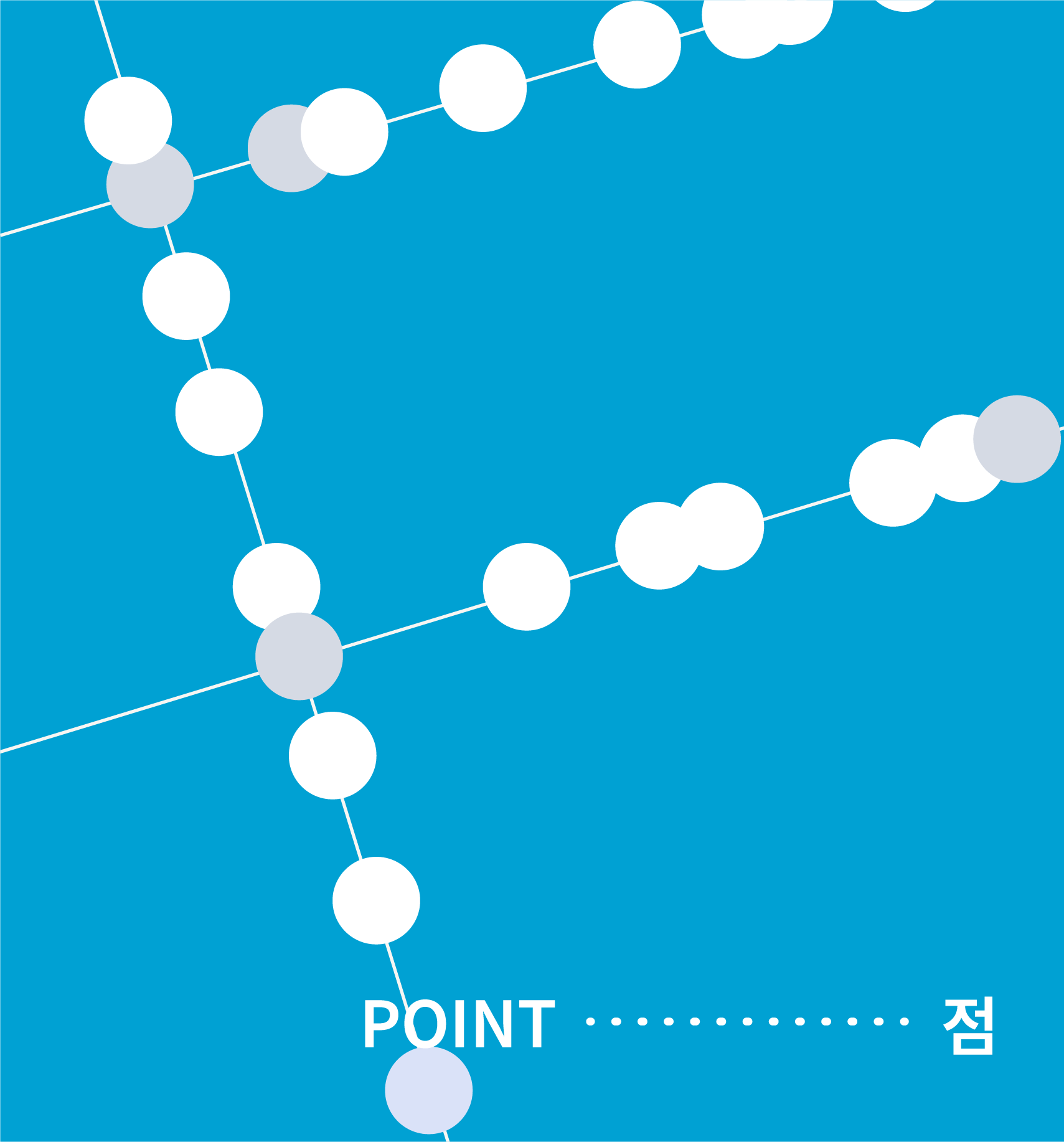
Leak Location Confirmation
Collects on-site acoustic data using portable smart leak detectors (Handy) and autonomous vehicles (UGV).
Precisely distinguishes leak characteristics by accounting for background noise and confirms exact leak locations through a step-by-step FSM decision procedure.
Designed for reliable detection even by non-experts or in unmanned environments, effectively reducing field dispatch frequency and inspection time.
Solution
With technology that truly understands water networks, we deliver an all-in-one solution spanning detection, diagnostics, prediction, and operations.
Simulates flow rate, water pressure, and valve behavior across the network to map abnormal patterns and predict future scenarios.
View More →Combines FSM logic with physics-based flow analysis to quantify leak probabilities and recommend inspection and restoration priorities.
View More →Automatically collects high-quality acoustic and location data while moving along pipelines with UGV and Handy.
View More →Manages everything from real-time District Metered Area (DMA) analysis to automated restoration planning on a single screen.
View More →Integrates with the platform to guide operators to detection points and record inspection results in real time.
View More →